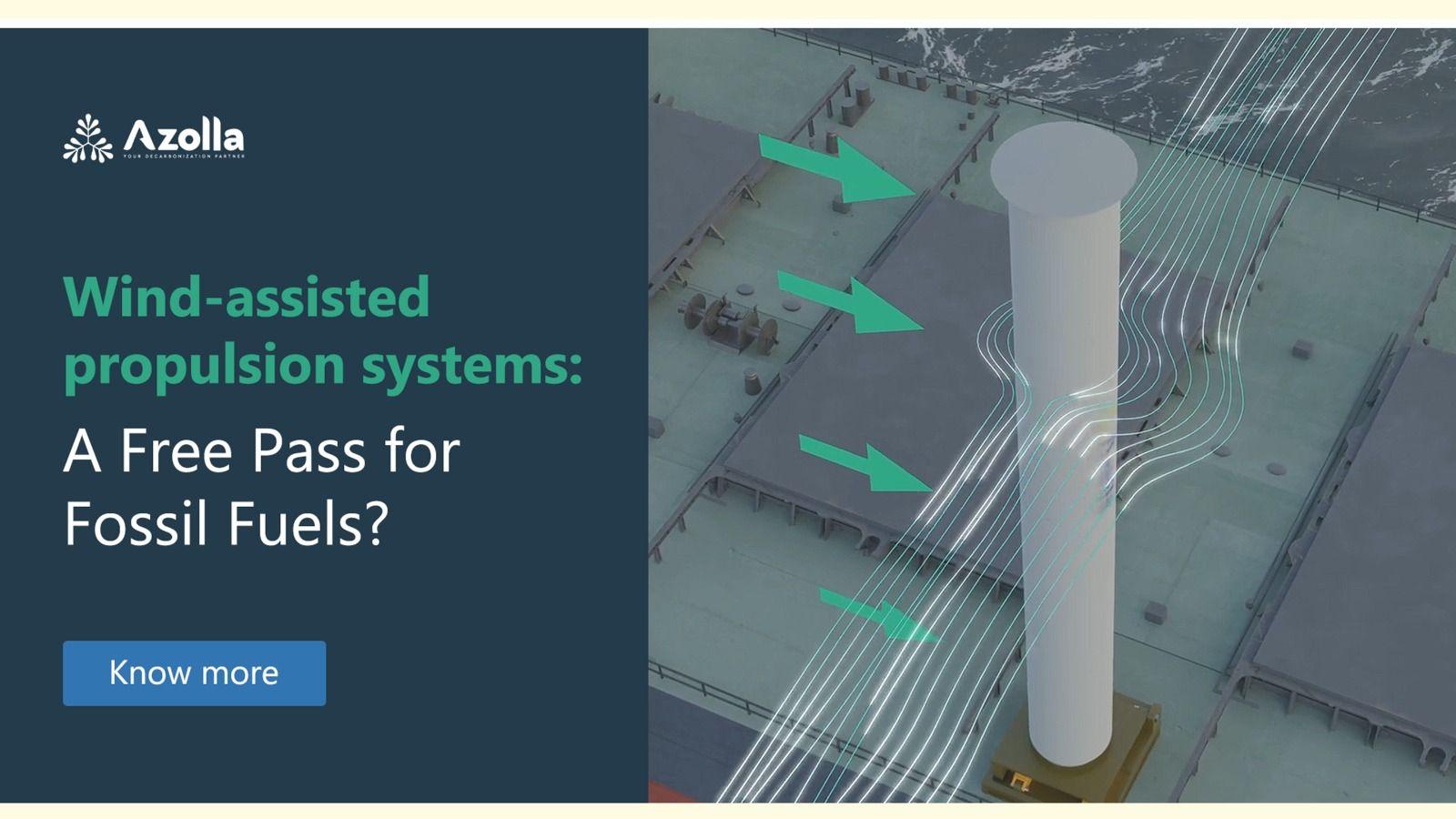
Is a Wind-assisted propulsion system (WAPS) a free pass for fossil fuels?
SummaryFwind FactorBreaking it down with an ExampleBottom line?Share
-
Share
-
Fwind Factor
Yes, you heard it right. FEUM surplus generation while still burning fossil fuels!
Let's start by understanding Wind Reward Factor (fwind).
To incentivise the adoption of wind-assisted propulsion systems (WAPS), FEUM introduces a Wind reward factor for ships equipped with WAPS. This wind reward factor, ranging from 1% to 5%, is applied to the vessel's GHG intensity calculation, effectively improving its compliance status.
GHG Actual = F wind X (WtT (Fuel, Electricity) + TtW (Combustion, Slip))
Breaking it down with an Example
Let's break this down with an example,
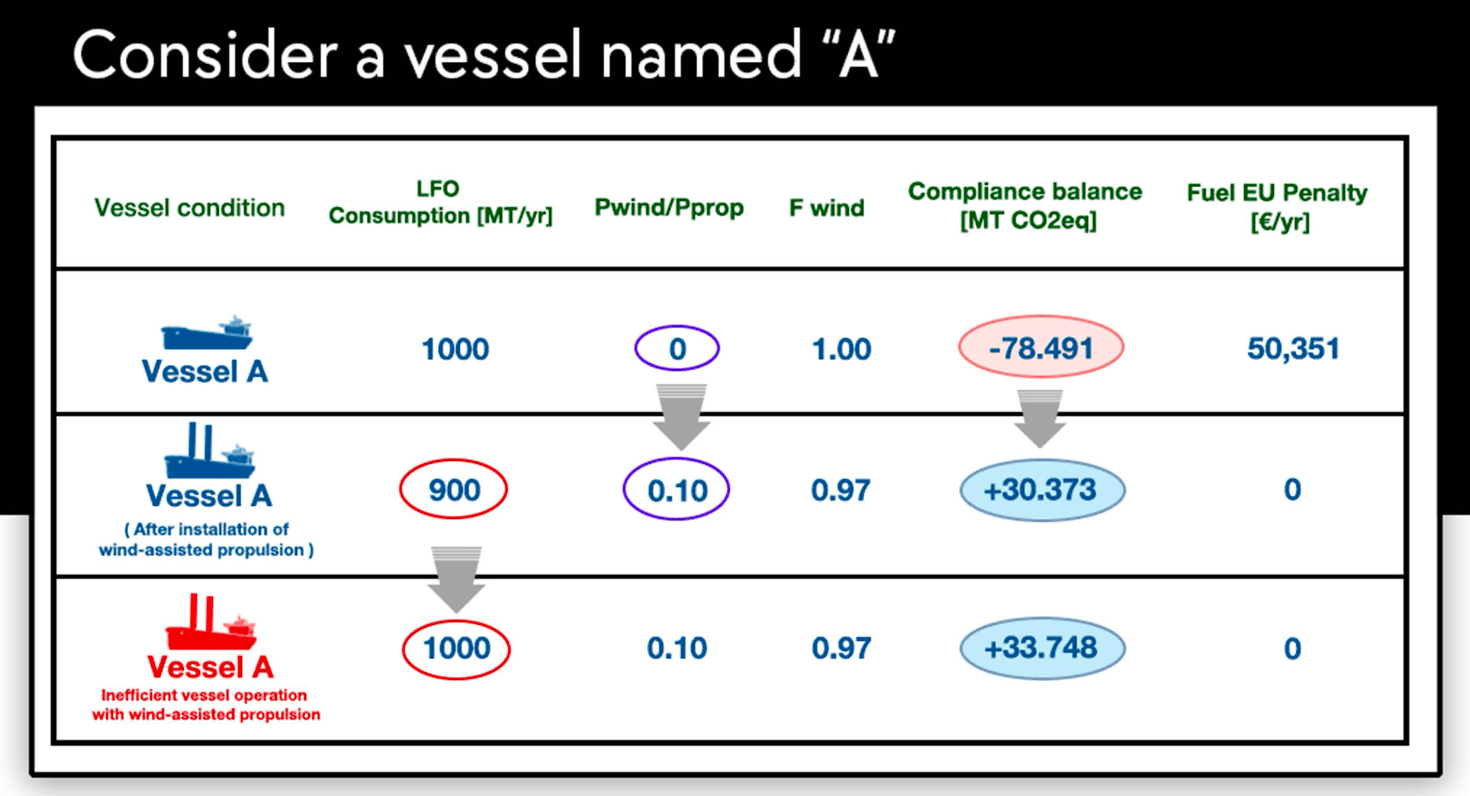
As per the above example, if vessel A is operated inefficiently and the fossil fuel use stays at 1000 MT despite having wind sails, the compliance surplus further increases to +33.748 MT! Which shouldn't be the case, isn't it?
While the intention behind FEUM is to drive a real transition towards cleaner energy sources, suspected loopholes like this raise serious questions about whether the regulation truly aligns with its goal.
Bottom line?
With wind sails onboard, a vessel's ability to generate compliance balance surplus (CO₂eq) becomes directly proportional to its fossil fuel consumption, whether the sails are used or not. Thus, more fuel burned = more surplus created.
Note: With a 2% GHG reduction target and WAPS offering up to 5% savings, surplus generation is possible even without fuel cuts. By 2030 (6% target), this will no longer hold.
Share
-
Contact us today to embark on a journey of discovery.optimization.maritime leadership.discovery.